4/22/2011 New CINEMATORIALIST: The Style of "The Hours"
"The Hours" is kind of a mixed bag - alternately dreary and glorious, thoughtful and overtly sentimental, but it's a movie I'd recommend to most people, if you're into the mystery of the feminine psyche and all that. But the visuals are splendidddd and the costumes are no exception. I for one really loved the simplicity and dreaminess of the Woolf-period.

- 2 comments
-
Posted under
the hours

4/17/2011 Tipoff: Be Existentially Overwhelmed By Watching "The Tree of Life" and "Melancholia" Trailers Side by Side
 Terrence Malick is a name you should know, because even if you haven't seen any of his movies ("Thin Red Line", "Badlands", "The New World"), his name will come in handy if you ever find yourself in the midst of cinephiles and feel the need to sound culturally highbrow, just say "Malick. I like Terrence Malick a lot", and all the aesthetes will murmur in agreement and look upon you favorably.
 Lars Von Trier is, for those unfamiliar with him, another filmmaker who carries a lot of cred in the cinematic circles, and whether he's a misogynistic sadist or the most visually distinctive and visionary director of our time, it's considered super chill to bring up his name in any film conversation.
ANYWAY. "Tree of Life" and "Melancholia" are beyond doubt, the two most anticipated movies for a good majority of cinephiles. It's really a Very Big Deal. The trailer for Malick's "The Tree of Life" was released several months ago, and once the internet got over its collective visualgasm, the trailer for Lars Von Trier's "Melancholia" came out. What struck everyone right away was 1) how much the trailers perfectly represented the heart and style of their respective directors and 2) how much thematic content of the two movies seem to complement each other. They're like twins, with "Melancholia" being the evil twin/dark counterpart and "Tree of Life" its sunny, shiny, good half.
Watch the trailers below. One after the other. It doesn't matter which order. Afterwards, eat something like a cookie, just so you can enjoy an act that is concrete and simple, the polar opposite of any Malick/Von Trier movie.
- 0 comments
-
Posted under
tree of life
4/15/2011 Word to the Wise: Arcadia (Tom Stoppard)
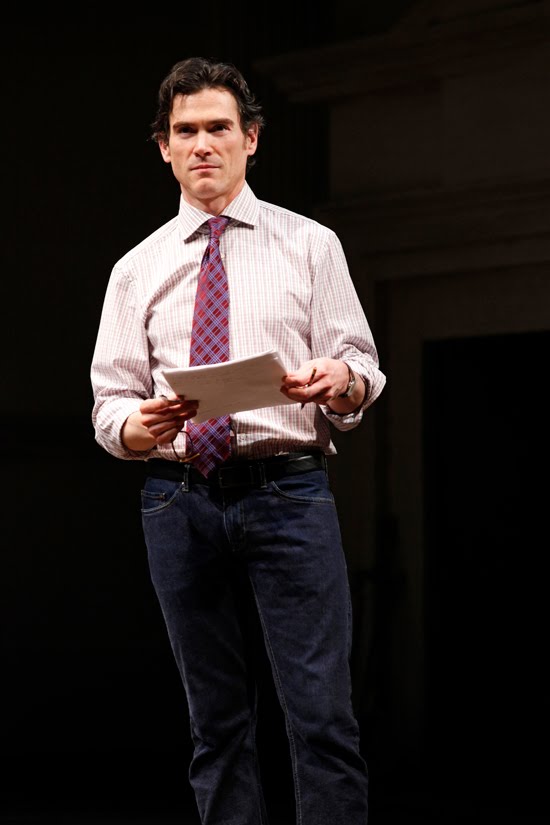 Here are some quick and informal thoughts on the production of Arcadia on Broadway, which I saw tonight with my English class. Essentially, it was mindblowing. In the most subtle way possible. Granted, its verbose and complicated nature makes it extremely inaccessible. I feel like everything my English seminar (titled “Science Literature & Culture) has been studying so far has been leading up to the sole goal of reading, seeing, and comprehending Arcadia, from reading Plato’s theory of education and Darwin and the chaos theory to Sherwood Anderson’s “Winesburg, Ohio” and Zora Neale Hurston.
- 0 comments
-
Posted under
Word to the Wise
3/28/2011 ARTIST PROFILE: THIS IS (NOT) CRAP! THE WORK OF ALLISON COHEN


She spoke of how he used elephant dung to paint pictures of the Madonna, simultaneously creating a cultural commentary and playing upon the religious significance of elephant dung in Zimbambwe. Cohen then explained how she replicated this process at home with her pet African Gray Parrot. She painted a canvas a tone that would emphasize the white urates, allow nature to take its course, and then fix the canvas with a gel medium. Then, like Offili, she superimposed a picture on these deposits, matching the natural tonal values of the excrement to the paint. She got some mixed responses from an obviously close-minded audience, "Most people upon seeing the bird poop pieces would be like 'Oh that's so pretty! It looks like Jackson Pollock, how'd you do that?' And I'd be like, 'It's poop,' and they'd be like 'Ew.'" She laughed mischievously but then suddenly made the transition from delighted imp to introspective academic announcing, "It was interesting to see the reaction produced by the visual aspect of the painting and then the reaction produced by the medium that was used to make it."As the work of all great artists was reviled before it was accepted, I believe that we can expect only remarkable things from Ms. Cohen. Who knows, between her and Offili's efforts, they may have already set the precedent for the next emerging art form.
FOR MORE, VISIT: http://allisongallery.com

- 0 comments
-
Posted under
Esther